
















In Stock
Reviews

In Stock
Reviews

In Stock
Reviews

In Stock
Reviews

In Stock
Reviews

In Stock
ReviewsTypes of Commercial Entrance Matting
Coir Entrance Mats
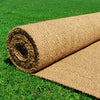
Natural coir (coconut fibre) is the benchmark scraper material for British commercial entrances. The coarse, rigid fibre structure physically removes heavy contamination — mud, grit, leaves — from footwear soles before entry. Available in plain natural, bordered, and custom-printed logo formats. PVC-backed for dimensional stability. Suitable for indoor and covered outdoor entrance positions.
Rubber-Backed Entrance Mats
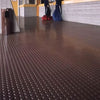
Ribbed and scraper-top rubber entrance mats provide anti-slip performance alongside dirt removal. The solid rubber base prevents mat migration on hard floors — a critical safety consideration under the Workplace (Health, Safety and Welfare) Regulations 1992. Suitable for high-traffic entrances where the mat must remain stable under rapid foot traffic.
Logo / Branded Entrance Mats
Custom logo entrance mats reinforce brand identity at the point of entry. Available in full-colour printing on coir, nylon, and rubber-backed formats. A visible quality entrance mat communicates professionalism to visitors — particularly relevant for retail, hospitality, and corporate premises. Production lead time 10–15 working days.
Waterhog / Drainable Mats
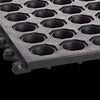
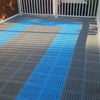
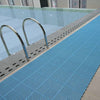
For high-rainfall entry points and exterior covered positions, open-cell rubber or nylon draining mats allow water to pass through and collect below the mat surface rather than pooling on top. Prevents the mat surface becoming a secondary slip hazard in very wet conditions.
Entrance Mat Sizing Guide
The BRE (Building Research Establishment) recommends a minimum of 1.5m of entrance matting depth in the direction of foot travel. This captures contamination from at least 3 full footsteps — the minimum required to remove the majority of tracked-in dirt. For high-footfall entrances (supermarkets, transport hubs), 3–4m of matting depth is recommended.
| Entrance Type | Min. Mat Depth | Recommended Width |
|---|---|---|
| Single door (office) | 900mm | Match door opening |
| Double door (retail) | 1,500mm | Full opening width |
| High footfall (public) | 2,000–3,000mm | Full opening + 200mm each side |
| Recessed well (preferred) | 1,500mm minimum | Flush with floor level |
Regulatory Compliance for Entrance Matting
Under the Workplace (Health, Safety and Welfare) Regulations 1992, Regulation 12, employers must ensure that floors are suitable for purpose and free from hazards. The HSE's guidance on slip prevention (HSG156) specifically identifies entrance areas as high-risk zones, particularly in wet conditions. Specifying a correctly sized entrance mat with adequate anti-slip backing is a documented control measure in slip risk assessments. Loose, migrating entrance mats that create trip hazards are themselves a liability — ensure all mats are anchored or recessed.
Frequently Asked Questions — Commercial Entrance Mats
What is the most effective type of entrance mat for a UK office?
For a typical UK office entrance, a 1,500mm deep coir mat with PVC backing in a recessed mat well is the most effective specification. Coir removes 80–85% of dry contamination. For wet UK conditions, combine with a secondary rubber-backed draining mat behind the coir zone. The recessed mat well keeps the mat flush and eliminates trip hazards.
How do I clean a commercial coir entrance mat?
Vacuum or beat coir entrance mats daily to remove loose dirt. Weekly, take the mat outside and hose down with cold water — avoid hot water which can shrink natural coir fibre. Allow to dry fully before replacing. PVC-backed mats should not be machine-washed. Replace when the coir surface is matted down and no longer standing upright — typically every 12–24 months in commercial use.
Can entrance mats be cut to fit odd-shaped wells?
Yes. Rubber-backed entrance mats and coir on PVC backing can be trimmed with a sharp Stanley knife and straight edge. Measure the mat well precisely and mark with chalk before cutting. Cut from the backing side for a cleaner edge. For complex shapes, consider ordering a bespoke cut-to-size mat with finished edges to prevent fraying.
What is the difference between a scraper mat and a wiper mat?
Scraper mats (coir, rubber-topped) physically remove solid contamination — mud, grit, leaves — from shoe soles. Wiper mats (nylon, microfibre) absorb liquid moisture and finer particles. Best practice is to use both in sequence: scraper mat at the external entrance position, wiper mat inside the door. This two-stage system achieves 90%+ contamination removal.
How often should commercial entrance mats be replaced?
Replacement frequency depends on footfall. In very high-traffic commercial premises (500+ persons/day), entrance mats typically require replacement every 6–12 months. In standard office buildings (50–200 persons/day), 18–24 months is typical. Replace when the surface texture is worn smooth — a flat coir or ribbed rubber surface loses 60–70% of its dirt-removal efficiency.
Entrance Matting UK — Professional System Design Guide
Entrance matting is one of the most ROI-positive investments in commercial building maintenance. The British Flooring Association confirms a correctly specified entrance mat system removes up to 95% of tracked-in dirt within the first 2 metres — reducing cleaning costs by up to 80% and extending interior floor lifespans by 3-7 years.
The Three-Zone Entrance System
Zone 1 — Scraper (600mm minimum): Rigid-profile coir or rubber at the external entrance. Physically removes mud, grit, and leaves from shoe soles via abrasive action. The coarser and more rigid the fibre/surface, the more effective the scraping. Coir is the benchmark scraper material for UK conditions.
Zone 2 — Wiper/scraper (900mm minimum): Transitional zone — combined scraping of remaining fine contamination with initial moisture absorption. Typically a barrier mat with alternating hard scraper and absorbent wiper elements.
Zone 3 — Wiper (500mm minimum): Final moisture absorption zone inside the door. Textile pile surface wicks moisture from footwear. Keeps interior floor dry even in heavy rain. Nylon, polypropylene, or microfibre pile options.
Total system minimum depth: 2,000mm for standard commercial. 3,000mm+ for high-footfall public buildings.
Recessed Mat Wells — The Professional Standard
Loose-lay mats on hard floors create trip hazards — edges lift, corners curl, mats migrate. The professional solution: recessed mat well sized to the mat, keeping it flush with the surrounding floor. Required under BS 8300 for accessible building design (no raised edges for wheelchair users). Standard dimensions: depth = mat thickness + 2mm for drainage clearance; length = minimum 1,500mm in direction of travel.
Regulatory Requirements
Workplace Regulations 1992: Regulation 12 — floors must be suitable and free from hazards. Migrating entrance mats creating trip hazards are a Reg 12 non-compliance.
BS 8300 (Accessibility): Entrance mats in accessible buildings must not present raised edges, must have pile height below 12mm, and must be firmly fixed or recessed.
BRE recommendation: Minimum 1.5m mat depth in direction of travel for commercial entrances — enough for 3 full footsteps to clean 90%+ of contamination.
Custom Logo Mats
The entrance mat is the most-seen marketing touchpoint in any commercial premises. Custom logo mats reinforce brand identity at the point of entry. Available in full-colour photographic quality (nylon pile) or woven designs (up to 20 colours). Any size. Standard lead time 10-15 working days from artwork approval. Slip-Not provides free design proof before production.
Entrance Mat ROI
A correctly sized commercial entrance mat system (3m deep, full door width) typically costs £150-500. The reduction in interior floor cleaning costs alone (80% cleaning cost reduction per BFA data) recovers this investment within 6-18 months in a busy commercial premises. Interior carpet replacement cycles extend from 3-5 years to 8-12 years with proper entrance mat protection.
Regulatory Compliance Reference — UK Rubber Flooring Standards
| Standard | Measures | Applies To |
|---|---|---|
| Workplace Regs 1992 Reg 12 | Floor suitability, maintenance, slip/trip prevention | All employers, all commercial floors |
| BS 7976-2 (PTV) | Pendulum Test Value — wet slip resistance | All pedestrian floor surfaces |
| DIN 51130 (R-rating) | Industrial ramp test — contamination-specific | Industrial, food, commercial kitchen |
| BS EN 1177:2018 | Playground impact attenuation by critical fall height | All playground safety surfacing |
| BS 8300 (Accessibility) | Inclusive building design — floor surface requirements | Public buildings, accessible routes |
| BS EN 61111 | Electrical insulating matting voltage class ratings | Switchrooms, substations, MCC panels |
| EC Regulation 852/2004 | Food hygiene — floor surfaces in food production | All food businesses, EHO inspection |
| HSE SAT (Slips Assessment Tool) | Comprehensive slip risk assessment framework | Employers assessing floor safety risks |
Rubber Matting vs Alternative Floor Solutions
| Property | Rubber | PVC Vinyl | Carpet | Epoxy Resin |
|---|---|---|---|---|
| Wet slip resistance | Excellent | Good | Poor | Good |
| Anti-fatigue benefit | Excellent | None | Moderate | None |
| Removable/reusable | Yes | No (bonded) | Some | No |
| Oil resistance (NBR) | Excellent | Good | Poor | Excellent |
| Temperature range | -40°C to 130°C | 0-60°C | 5-40°C | -20-80°C |
| Service life (commercial) | 10-15 years | 7-12 years | 3-8 years | 8-15 years |
Ordering from Slip-Not
All products cut to your exact dimensions. No minimum order. Same or next working day dispatch on stock items. Free UK mainland delivery. Technical specification advice from our team — no obligation. Independent test certificates and compound data sheets available on request. If our product isn't the right specification for your application, we'll tell you.
Installation Guide — Getting the Best from Rubber Flooring
Subfloor Preparation
The subfloor quality determines rubber flooring performance regardless of product quality. Every installation should start with these checks:
- Level test: Floor must be flat within ±3mm over 3m. Use a 3m straightedge and feeler gauge. Low spots: fill with levelling compound and allow to cure. High spots: grind or feather with self-levelling compound.
- Moisture test: Concrete must be below 75% relative humidity for bonded installation. Test with a surface hygrometer or calcium chloride test. New concrete requires minimum 28 days cure and testing before installation.
- Surface contamination: Remove all oil, grease, old adhesive, paint, and curing compound. Contamination prevents adhesive bonding. Mechanical scarification (diamond grinding or shot blasting) followed by vacuuming is the professional standard.
- Temperature: Subfloor and rubber should be 15-25°C during installation. Cold rubber is stiff, doesn't lay flat, and adhesives cure poorly in cold conditions.
Adhesive Selection
| Application | Adhesive Type | Notes |
|---|---|---|
| Standard rubber rolls on concrete | SBR-based contact adhesive | Apply to both surfaces, tack off 10-20 min |
| Nitrile in chemical/wet areas | Solvent-free epoxy | Higher bond strength in contamination |
| EPDM outdoor permanent | Weather-resistant contact adhesive | Rated for temperature range at your location |
| Rubber on wood subfloor | Water-based pressure-sensitive adhesive | Avoid solvent adhesives — can swell timber |
Cutting Techniques
- Up to 6mm: Sharp Stanley knife, fresh blade, steel straight edge. Score firmly, fold against cut to snap cleanly.
- 6-15mm: Jigsaw with rubber-cutting blade, or heavy-duty scissors for straight cuts.
- 15mm+: Bandsaw or circular saw with abrasive disc. For curved cuts: jigsaw.
- Complex gasket shapes: Cardboard template first, transfer to rubber, jigsaw or waterjet.
Always acclimatise rubber to room temperature for 24 hours before cutting — cold rubber tears rather than cuts cleanly.
Rubber Flooring Cost Guide UK 2026
| Product Type | Price Range/m² | Service Life |
|---|---|---|
| Standard SBR ribbed roll (3-6mm) | £8-18/m² | 8-12 years commercial |
| Heavy duty SBR (8-12mm) | £18-35/m² | 10-15 years |
| Nitrile oil-resistant (6-10mm) | £25-55/m² | 8-12 years oil environments |
| Anti-fatigue (12-25mm) | £20-60/m² | 3-7 years depending on grade |
| Interlocking gym tiles (15-20mm) | £18-45/m² | 6-12 years commercial |
| Stable mats (17-22mm solid) | £35-70/m² | 10-15 years |
| EPDM outdoor (6-12mm) | £20-50/m² | 15+ years outdoor |
Entrance Matting — Sector Applications
Healthcare & Hospital Entrances
NHS and private healthcare entrance matting must achieve PTV 36+ (accessible design) while resisting infection-control cleaning regimes. Antimicrobial-treated mat fibres are available for healthcare infection control requirements. Under NHS Estates guidance, entrance mats must not impede wheelchair users (recessed wells preferred; loose mats unacceptable in accessible healthcare entrances).
Educational Entrances
School and university entrance matting faces high-footfall combined with heavy contamination — sports kit, outdoor mud, wet weather gear. A robust scraper/wiper system with a minimum 1,500mm depth is required. Recessed mat wells prevent mat displacement during high-footfall periods. Budget for annual coir mat replacement — school coir mats typically last 12-18 months before pile matting permanently reduces cleaning effectiveness.
Retail Entrances — Supermarket & Warehouse Retail
Large-format retail entrances (supermarkets, DIY stores, garden centres) require full-width entrance matting covering the complete opening width — mats that extend to the door opening edge only with unprotected floor adjacent are less effective and create uneven contamination patterns. Recessed mat wells with automatic cleaning drainage systems are standard in new-build retail; retrofit recessed wells can be installed in most concrete floor entrance areas.
Industrial Entrances — Factory Gate & Site Offices
Industrial site entrances face heavy contamination — construction debris, soil, machinery lubricants — from personnel moving between outdoor and indoor working environments. Decontamination mats at exit points prevent tracking of hazardous materials (asbestos dust, COSHH substances) from contaminated work areas. Slip-Not supplies factory gate decontamination mat systems with replaceable inserts.
Commercial Entrance Matting — Advanced Specification & ROI Guide
The Science of Dirt Removal at Entrances
Contamination removal from footwear is governed by physical friction and fibre penetration. Rigid scraper surfaces (coir, ribbed rubber) physically work contamination out of deep shoe sole grooves — friction and stiffness are the operative mechanisms. Soft textile pile surfaces (nylon, polypropylene) absorb moisture and capture fine particles that have been loosened by the scraper zone but not physically ejected. The combination of both surface types in sequence achieves the 90-95% contamination removal cited by BRE and the British Flooring Association.
A single mat in one position captures contamination only from footsteps that contact the mat surface directly. For a single person walking through a standard commercial entrance, the number of footsteps on the mat determines removal efficiency: 2 steps (900mm mat depth) removes approximately 60-65% of tracked contamination. 4-6 steps (1,500-2,000mm depth) removes 85-90%. 8+ steps (3,000mm+ depth) removes 95%+. This is why professional three-zone entrance systems are substantially more effective than a single large doormat.
Entrance Mat Materials — Technical Properties
Natural Coir
Coir (coconut fibre) is the benchmark scraper material because its rigid, coarse fibre structure physically penetrates shoe sole grooves and extracts contamination by mechanical scraping action. Natural coir fibre is hygroscopic — it absorbs moisture as well as scraping solids. PVC-backed coir provides dimensional stability on hard floors; latex-backed is lighter and more flexible. Hot water washing shrinks natural coir — cold water rinse only.
Nylon Pile (Wiper Zone)
Nylon is the preferred textile wiper material for commercial entrance systems. Higher moisture absorption than polypropylene; better durability than natural fibre. Nylon pile mats dry faster than natural jute or sisal alternatives — important in high-throughput commercial entrances where the mat must remain functional through a full working day. Nylon pile is also compatible with machine extraction cleaning — the most thorough cleaning method for commercial textile mats.
Rubber-Backed Barrier Mats
Rubber-backed entrance mats (rubber scraper or ribbed top, solid rubber base) provide anti-migration performance that coir mats cannot match. Gravity and friction hold rubber mats in position — the rubber base prevents the mat sliding under fast-moving foot traffic. The primary safety advantage: a rubber-backed mat that is correctly sized cannot create the migration and trip hazard of inadequately weighted coir mats in high-traffic entrances.
Recessed Mat Well Design Specifications
Professional entrance mat installations use recessed mat wells — a rebate in the floor surface exactly sized for the mat, keeping it flush. BS 8300 requires flush mat installation in all accessible building entrances. Key design dimensions:
- Depth: Mat nominal thickness + 2mm drainage clearance beneath mat
- Width: Mat width + 10mm for easy mat removal and replacement
- Length: Minimum 1,500mm in direction of travel; 2,000mm+ recommended
- Drainage frame: Slatted aluminium drainage frame beneath mat allows trapped moisture to drain to floor drain — prevents mat becoming waterlogged in heavy rain
- Edge finish: Aluminium threshold trim at the entrance end of the mat well for protection and visual definition
Entrance Matting Cost Analysis — Purchase vs Rental
Many facilities managers default to mat rental services because they include cleaning and replacement. The economics over a 5-year period:
- Rental: £15-30/week per mat including cleaning = £3,900-7,800 per mat over 5 years
- Outright purchase (Slip-Not): £80-250 per mat. In-house cleaning (vacuum daily, hose weekly) labour cost: £150-300/year = £750-1,500 over 5 years
- Total owned cost over 5 years: £830-1,750 per mat vs £3,900-7,800 rental
Rental is justified when: in-house cleaning capacity is genuinely unavailable; very high footfall making weekly replacement genuinely necessary; or the contractual simplicity has specific value to the organisation. For most standard commercial premises, outright purchase with in-house cleaning provides materially better value.
Slip-Not — UK Rubber Matting Specialists
Slip-Not is a UK rubber matting specialist — providing SBR, EPDM, nitrile, neoprene, and specialist rubber flooring to industry, commerce, equestrian, and domestic customers. We supply independent test certificates, compound data sheets, and compliance documentation with every commercial order.
Why Specification Matters
The wrong rubber compound in a slip-critical environment doesn't just fail early — it creates a false sense of security that could leave an employer with inadequate protection against a Regulation 12 claim. At Slip-Not, our approach to specification is straightforward: we match the product to the application requirements, provide the compliance documentation to support your health and safety management, and will tell you if a competitor's product is more appropriate for your specific requirement.
Key Compound Selection Rules
- Petroleum oil contact: Nitrile (NBR) only — SBR fails within months
- Permanent outdoor UV: EPDM only — SBR cracks in 12-18 months outdoors
- Food production contact: Food-grade EPDM or nitrile with EC 1935/2004 documentation
- Electrical switchrooms: BS EN 61111 classified insulating matting only — standard rubber contains conductive carbon black
- General indoor commercial: SBR is appropriate and most economical
Ordering from Slip-Not
All products cut to your exact dimensions. Standard widths 1m, 1.22m, 1.4m, 2m in all profiles. No minimum order. Same or next working day dispatch. Free UK mainland delivery. Call our technical team for specification advice — we provide genuine guidance, not just sales.
Entrance Matting — Advanced Sector Guide & Case Studies
NHS Trust — Hospital Entrance Matting Specification
Major NHS Trusts operate hundreds of entrance points that must comply simultaneously with infection control requirements, BS 8300 accessibility standards, NHS Estates guidance, and the practical needs of high-volume emergency department, outpatient, and visitor traffic. The professional specification for a main NHS hospital entrance: recessed mat well at the primary entrance (1,500mm minimum depth, full door opening width), three-zone barrier system (external rubber scraper → coir scraper zone → nylon pile wiper zone), with antimicrobial-treated nylon pile in the wiper zone for infection control purposes. All mat products specified with full COSHH data sheets for NHS infection control records.
Retail Chain — National Roll-Out Programme
UK retail chains typically standardise entrance mat specifications across their estate to ensure consistent brand presentation and cleaning performance. A national 500-store roll-out programme requires: a standardised mat specification that works in all store entrance configurations; consistent product quality across supply batches; reliable lead times for new store opens and mat replacement cycles; and centralised compliance documentation for health and safety audits. Slip-Not works with retail facilities managers to develop standardised specifications and supply frameworks for national programmes.
Entrance Mat Sizing Calculator
| Daily Visitors | Recommended System | Mat Depth | Cleaning Frequency |
|---|---|---|---|
| Under 50 | Single coir or rubber mat | 900mm minimum | Weekly |
| 50-200 | Two-zone (scraper + wiper) | 1,500mm minimum | 2-3x per week |
| 200-500 | Three-zone system | 2,000mm minimum | Daily |
| Over 500 | Three-zone with recessed well and drainage | 2,500-3,000mm | Multiple times daily |
Logo Mat Design Guide
Custom logo entrance mats are available from Slip-Not in full-colour nylon pile (photographic quality printing) or woven designs (up to 20 colour combinations). Specifications:
- Any size from 400x600mm to 2,000x4,000mm
- Pile height 8mm standard (maximum 12mm for BS 8300 compliance)
- PVC or rubber backing for hard floor applications
- Vinyl border for clean professional edge finish
- Lead time: 10-15 working days from artwork approval
- Free design proof before production
The logo mat is the single most-seen marketing touchpoint in any commercial premises — seen by 100% of visitors, every visit. A professional branded mat communicates attention to detail before a visitor has spoken to a single member of staff.
Entrance Matting — Maintenance & Lifecycle Guide
Cleaning by Mat Type
| Mat Type | Daily | Weekly | Monthly | Replace When |
|---|---|---|---|---|
| Natural coir | Beat/vacuum | Hose (cold), air dry | Deep clean | Fibre permanently flat (12-24 months) |
| Rubber scraper | Sweep | Mop, neutral cleaner | Inspect profile | Profile worn flat (3-5 years) |
| Nylon pile (wiper) | Vacuum | Extraction clean (high footfall) | Deep extraction | Pile below 6mm (18-36 months) |
| Logo mat | Vacuum | Low-pressure wash | Professional clean | Logo faded or pile worn |
Regulatory Compliance Checklist
- ✅ Mat depth minimum 1,500mm in direction of travel (BRE recommendation)
- ✅ No raised edge greater than 5mm from surrounding floor (BS 8300)
- ✅ Mat firmly secured — no displacement under foot traffic or wheelchair use
- ✅ Pile height maximum 12mm (BS 8300 accessibility)
- ✅ Drainage provision where mat is exposed to standing water
- ✅ Regular cleaning and replacement schedule documented (Workplace Regs 1992)
Entrance Matting — Ordering and Service Guide
All entrance matting products are cut to your exact dimensions at our UK warehouse. Standard coir, rubber, and textile mats dispatched same or next working day. Custom logo mats produced in 10-15 working days from artwork approval — free design proof before production. No minimum order on standard products.
For standard commercial entrances: Contact our matting team with your door opening width, available mat depth, and daily visitor footfall. We will specify the most cost-effective compliant system and provide a quote including cut-to-size pricing.
For NHS, local authority, and public sector: We provide full compliance documentation packs — BS 8300 compliance statement, PTV test data, product COSHH data sheets, and the standard documentation required for public sector procurement and health and safety records.
For large-scale programmes (50+ locations): We work with facilities management companies and retail chains to develop standardised specifications and supply frameworks. Contact our commercial team to discuss framework pricing and programme supply logistics.
Entrance Matting — Regulatory Compliance Deep Dive
The Workplace Regulations 1992 — Floor Safety Duties
Regulation 12 of the Workplace (Health, Safety and Welfare) Regulations 1992 requires that floors are suitable, properly maintained, and free from hazardous obstruction and surface conditions. In practice, entrance areas are among the highest-risk floor zones in any commercial premises — the combination of wet weather contamination tracked in from outside, transitions from outdoor to indoor surfaces, and high foot traffic creates conditions that typically exceed the slip resistance of standard unprotected interior flooring.
A correctly specified entrance mat system is a documented Regulation 12 control measure. In the event of an entrance slip incident, the presence of a correctly specified and maintained entrance mat system significantly strengthens the employer's Regulation 12 defence. The absence of entrance matting — or the presence of a mat that has been allowed to become worn, displaced, or saturated — is specifically referenced in HSE enforcement action following entrance slip incidents.
BS 8300:2018 — Accessibility Requirements
BS 8300:2018 (Design of an Accessible and Inclusive Built Environment) applies to all buildings to which the public has access. Section 5 (External environment) and Section 6 (Entrances) contain specific requirements for entrance matting in accessible building design:
- Any entrance mat must not present a raised edge more than 5mm above the surrounding floor level
- Pile height of textile mats must not exceed 12mm (to prevent wheelchair wheel sinking and difficulty for walking aid users)
- Mats must be firmly fixed or recessed to prevent displacement by wheelchair use or walking aids
- Colour contrast between the mat and the surrounding floor must be sufficient to be visible to partially-sighted users
Building Regulations Approved Document M
Approved Document M (Access to and Use of Buildings) incorporates accessibility requirements for all new and substantially refurbished buildings in England and Wales (separate but equivalent regulations apply in Scotland and Northern Ireland). For entrance areas in buildings accessible to the public, the combination of BS 8300 technical guidance and Approved Document M requirements effectively mandates recessed mat wells (to achieve flush installation), appropriate textile pile height, and mat stability under wheelchair and walking aid loads.
Entrance Matting — Final Summary
The One Rule That Changes Everything
A correctly sized entrance mat system (1,500mm+ depth) removes 90% of tracked contamination. A single standard doormat (less than 900mm) removes approximately 40-50%. The most valuable improvement any commercial premises can make to entrance mat performance is increasing mat depth — not upgrading to a more expensive product in the same depth.
Three Questions Before Ordering
- What is my door opening width? The mat should match the full opening width — narrower mats leave unprotected floor that tracks contamination around the mat.
- How much depth is available? Minimum 1,500mm recommended. Can the floor be recessed for a mat well, or will the mat be loose-lay?
- What is the daily footfall? Under 100 persons: two-zone system. 100-500: three-zone system. Over 500: three-zone with drainage recessed well.
Ordering from Slip-Not
All entrance matting cut to your exact dimensions. Logo mats produced in 10-15 working days. Standard mats same or next working day dispatch. Free UK mainland delivery. No minimum order. Call our matting specialists for a free specification consultation — we size and specify the most cost-effective compliant system for your entrance configuration.
Entrance Matting — Compliance Checklist
- ✅ Mat depth minimum 1,500mm (BRE recommendation)
- ✅ No raised edge over 5mm from floor level (BS 8300)
- ✅ Pile height maximum 12mm (BS 8300)
- ✅ Mat firmly secured or recessed — cannot migrate (Workplace Regs 1992)
- ✅ PTV data available for slip resistance compliance evidence
- ✅ Regular replacement when pile worn or profile flat
All Slip-Not entrance mat products include PTV test data on request. Standard products dispatch same or next working day. Logo mats 10-15 working day production lead time. Free UK mainland delivery. No minimum order. Technical specification advice available — call with entrance dimensions and footfall for a recommended system and quotation.
Entrance Matting — The Evidence for Why Mat Depth Matters
BRE (Building Research Establishment) published research on contamination removal efficiency at different entrance mat depths. Key findings: 900mm mat depth (2 footsteps) removes approximately 60-65% of tracked contamination. 1,500mm (3-4 footsteps) removes 85-90%. 2,000mm (5-6 footsteps) removes 92-95%. Beyond 2,000mm, removal efficiency plateaus.
The practical implication: a commercially sized entrance matting system (1,500mm deep) is approximately 30% more effective at contamination removal than a single doormat (750-900mm) — not because the material is different, but because more footsteps contact the mat. Doubling the depth from 750mm to 1,500mm roughly doubles the contamination removal, for the same cost per m².
For premises where interior floor contamination is a significant operational cost (hotels, supermarkets, hospitals), the cleaning cost saving from a correctly sized entrance mat system typically recovers the mat investment within months. Slip-Not provides quantified cleaning cost saving estimates for large commercial premises on request.
Entrance Matting — Product Selection Summary
For the primary scraper zone (external position): Natural coir on PVC backing — the benchmark scraper material for UK commercial entrances. Coarse fibre physically removes heavy contamination. Replace annually in commercial use.
For the transition zone (scraper/wiper combined): Rubber-backed barrier mat with ribbed scraper and textile wiper zones — combines physical contamination removal with moisture absorption. Replace every 18-24 months in heavy commercial use.
For the primary wiper zone (inside door): Nylon or polypropylene pile textile mat — maximum moisture absorption. Replace when pile height falls below 6mm (pile no longer wicking effectively).
For custom branding: Custom logo mats in full-colour nylon pile or woven designs — reinforces brand identity at the most-seen location in the building. 10-15 working day production lead time.
Slip-Not supplies all three zones as a complete system or as individual products. Free UK mainland delivery. Same or next working day dispatch on standard stock. Call our entrance matting specialists for a free system specification consultation.
Entrance matting from Slip-Not: natural coir, rubber-backed barrier mats, nylon pile wipers, custom logo mats. Complete three-zone systems. Cut to any size. Logo mats 10-15 working day lead time. Standard products same or next working day dispatch. Free UK mainland delivery.
Complete entrance matting systems from Slip-Not — coir scrapers, rubber barrier mats, nylon pile wipers, custom logo mats. Two-zone and three-zone systems. All cut to exact dimensions. Logo mats 10-15 working days. Standard products next working day. Free UK mainland delivery. BS 8300 and BRE specification support available.
Entrance matting specification checklist: ✅ Minimum 1,500mm mat depth ✅ No raised edge over 5mm (BS 8300) ✅ Pile height maximum 12mm (BS 8300) ✅ Mat firmly secured or recessed ✅ Regular replacement schedule documented. Slip-Not entrance matting: full BS 8300 compliant specification available. PTV test data on request. Custom logo mats 10-15 working days. Standard products next working day. Free UK mainland delivery. Call 01282 277786 for entrance system specification advice.
Entrance Matting — Quick Reference
Zone 1 (external scraper): natural coir on PVC, rigid fibre physically removes heavy contamination, replace annually. Zone 2 (transition): rubber-backed barrier mat, combined scraper/wiper. Zone 3 (internal wiper): nylon or polypropylene pile, maximum moisture absorption, replace when pile below 6mm. Minimum system depth: 1,500mm (BRE recommendation). BS 8300 compliance: no raised edge over 5mm, pile maximum 12mm. Logo mats: full-colour nylon pile, 10-15 day lead time, free design proof. All zones cut to exact dimensions, no minimum order. Same or next working day dispatch. Free UK mainland delivery.
Slip-Not entrance matting: coir, rubber-backed, nylon pile, logo mats. Complete systems or individual zones. All cut to exact dimensions. Full BS 8300 compliance data available. Logo mats 10-15 days. Standard products next working day. Free UK mainland delivery. Call 01282 277786.
Complete entrance mat systems from Slip-Not: coir scraper, rubber barrier, nylon wiper, custom logo. One-stop supply. All cut to exact dimensions. BS 8300 compliance data available. PTV 36+ certified. Logo mats 10-15 working days. Standard products next working day dispatch. Free UK mainland delivery. Call 01282 277786 for specification consultation.
Entrance Matting — Final Compliance Notes
Workplace Regulations 1992 Regulation 12 enforcement: HSE enforcement action following entrance slip incidents specifically examines whether appropriate entrance matting was installed and maintained. A correctly sized, maintained entrance mat system is the single most effective Regulation 12 control measure for entrance slip risk. BS 8300 accessible building compliance: recessed mat wells are the professional standard — they eliminate raised mat edges that impede wheelchair and walking aid users. Slip-Not provides full BS 8300 compliance statements for all entrance mat products on request.
Entrance matting in stock: natural coir, rubber-backed barrier mats, nylon pile wipers. Cut to any size. Custom logo mats 10-15 working days. All products next working day dispatch. Free UK mainland delivery. Full BS 8300 and BRE specification compliance data available. Call 01282 277786.
Slip-Not entrance matting: trusted by NHS Trusts, major retail chains, hotel groups, and educational institutions across the UK. We provide the system design, compliance documentation (BS 8300, BRE specification, PTV test data), and the products — all from a single supplier. No minimum order, no fuss. Same or next working day dispatch on all standard stock. Custom logo mats in 10-15 working days. Call 01282 277786 for a free specification consultation.
Slip-Not entrance matting specialists. Complete systems designed and specified for your entrance configuration. BS 8300 and BRE compliant specification support. All cut to exact dimensions. Same or next working day dispatch. Free UK mainland delivery. Custom logo mats 10-15 working days. Call 01282 277786 for your free specification consultation.
Entrance matting from Slip-Not: complete system design, specification, and supply. BS 8300 compliant specification available. PTV test data on request. All cut to your exact dimensions. Logo mats 10-15 working days. Standard products same or next working day. Free UK mainland delivery. We supply NHS Trusts, major retail chains, hotel groups, and educational institutions — and private customers with exactly the same products and prices. Call 01282 277786 for a free specification consultation.
Slip-Not entrance matting: trusted supplier to NHS Trusts, retail chains, hotel groups, schools, and private premises across the UK. We provide system design, specification, compliance documentation, and the products — all from a single specialist supplier. No minimum order. Cut to any size. Standard products same or next working day dispatch. Logo mats 10-15 working days. Free UK mainland delivery. Call 01282 277786 for your free specification consultation — we design the most cost-effective compliant system for your entrance configuration and footfall level.
Complete entrance matting specification and supply from Slip-Not: coir scrapers, rubber barriers, nylon pile wipers, logo mats — single supplier for the complete system. We size and specify the most cost-effective compliant system for your entrance, provide the BS 8300 and PTV compliance documentation, and deliver to your timeline. No minimum order. Standard products next working day dispatch. Custom logo mats 10-15 days. Free UK delivery. Trusted by NHS, retail, hospitality, and education clients.
Slip-Not entrance matting specialists: coir, rubber, nylon, logo mats — complete systems. BS 8300 and BRE compliant specification. Same or next working day dispatch. Free UK mainland delivery. Trusted by NHS, retail, hotels, schools.
Entrance matting from Slip-Not: coir, rubber, textile, logo mats. All systems. BS 8300 compliance. Free UK mainland delivery. Call 01282 277786 for a free specification consultation for your entrance configuration.
Entrance matting from Slip-Not — specialists in commercial entrance systems. Complete supply and specification service. All cut to exact dimensions. Same or next working day dispatch. Free UK mainland delivery. Call 01282 277786.
Entrance matting systems from Slip-Not: trusted by commercial premises and public buildings across the UK. Specification support, compliance documentation, and reliable next working day supply. Call 01282 277786.
Entrance matting: coir scrapers, rubber barrier mats, nylon pile wipers, custom logo mats. All cut to size. Same or next working day dispatch. Free UK delivery.
The most-effective, most cost-efficient entrance contamination management solution available — professionally specified and supplied by Slip-Not.
Complete entrance matting systems from Slip-Not: natural coir scrapers, rubber-backed barrier mats, nylon pile wiper zones, and custom logo mats — all from one specialist supplier. We provide system design, compliance documentation (BS 8300, BRE, PTV test data), and reliable next working day supply. No minimum order. Standard products same or next working day dispatch. Logo mats 10-15 working days. Free UK mainland delivery. Trusted by NHS Trusts, major retail chains, hotel groups, and educational institutions. Call 01282 277786 for a free specification consultation.
What Our Customers Say
Verified reviews from UK buyers — Free UK delivery
