

Rubber Grass Mats
Rubber grass mats from Slip-Not® are heavy-duty honeycomb mats and rolls that protect grass from hooves, vehicles, fo...




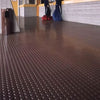




Rubber Grass Mats UK — Heavy-Duty Grass Protection for Paddocks, Car Parks & Play Areas
Heavy-duty rubber grass mats for horse paddocks, gateways, car parks, driveways, gardens and play areas. 16mm and 23mm interlocking mats or 10m rolls. Open-grid design keeps grass growing underneath. No minimum order, UK stock, fast dispatch.


In Stock
Reviews

In Stock
Reviews

In Stock
Reviews

In Stock
Reviews

In Stock
Reviews

In Stock
Reviews

In Stock
Reviews

In Stock
Reviews

In Stock
ReviewsShop Rubber Grass Mats by Use
- Horse paddocks, gateways and field shelters – 23mm rubber grass mats stop poaching and mud at gates, water troughs and feeding areas. See our guide to grass mats for paddocks and gateways.
- Driveways, car parks and grass verges – mats rated for cars and light vans keep overflow parking green and rut-free. Read grass protection mats for driveways.
- Playgrounds and under play equipment – 23mm grass mats give critical fall height protection to BS EN 1177 under swings and climbing frames without losing the natural grass look. See playground flooring.
- Garden paths, dog runs and lawns – 16mm mats and rolls protect worn routes to sheds, washing lines and gates and give dogs a mud-free run.
- Events, festivals and temporary walkways – 10m outdoor matting rolls lay quickly, drain freely and lift cleanly afterwards.
- Grass reinforcement mesh – for lighter traffic over large areas, our grass protection mesh is an economical alternative to rubber mats.
16mm or 23mm Rubber Grass Mats?
| 16mm grass mats | 23mm grass mats | |
|---|---|---|
| Best for | Garden paths, lawns, dog runs, light pedestrian use | Paddock gateways, car parks, play areas, heavy use |
| Traffic | Foot traffic, wheelbarrows, occasional cars | Horses, cars, vans, play equipment |
| Fall height (BS EN 1177) | Up to approximately 1.5m on grass | Up to approximately 3m on grass |
| Weight per mat | Lighter, easier to lay solo | Heavier, stays put under hooves and wheels |
Still unsure? Our rubber grass mats and mud control guide compares both thicknesses for every application.
How Rubber Grass Mats Work
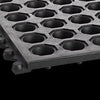
Each mat is a grid of thick rubber ribs with open cells. The ribs carry the load and spread it across the ground so hooves, tyres and feet do not compact the soil or tear the turf. Grass grows up through the cells, roots knit the mat into the ground within a few weeks, and rain drains straight through, so there is no standing water or mud. The mats are made from vulcanised recycled rubber, so they are UV stable, frost proof and will not rot, splinter or rust.
Installing Rubber Grass Mats
Mow the grass short, level any deep ruts with topsoil, and lay the mats with the ribs running across the direction of traffic. Fix them with the supplied U-pegs, or cable tie or clip adjoining mats so the area moves as one sheet. Overseed the cells and the grass will cover the mat in one growing season. Rolls can be cut with a sharp knife to follow curves and gateposts. Full fitting steps are in the installation guide.
Why Buy Rubber Grass Mats from Slip-Not?
- Trade thickness rubber – full 16mm and 23mm mats, not thin lightweight copies.
- Mats or rolls – pre-cut 1m x 1.5m mats for paddocks and play areas, or 1m x 10m rolls for paths and events.
- No minimum order – buy one mat for a gateway or a pallet for a car park.
- UK stock and fast dispatch – pallets and single mats leave our Lancashire warehouse the same working day on stock lines.
- Fixings and advice included – pegs, clips and a straight answer on how many mats you need.
Rubber Grass Mats FAQs
Can you mow over rubber grass mats?
Yes. Once the grass has grown through, set the mower deck above the mat height and mow as normal. A strimmer is handy for edges in the first season.
Do rubber grass mats stop mud?
Yes. By spreading the load and keeping the soil structure intact, grass mats stop the churning that turns gateways and paths into mud, and they drain freely so water never sits on the surface.
What are rubber grass mats used for?
Paddock gateways and field shelters, overflow car parks, driveways on grass, playground safety surfacing, garden paths, dog runs, caravan pitches and temporary event walkways.
Are rubber grass mats safe for horses?
Yes. The open grid gives excellent grip for shod and unshod hooves, the rubber is kind to legs and joints, and the mats stay put under heavy traffic when pegged. Pair them with stable mats for a complete yard solution.
Can grass mats be laid on hard ground or gravel?
Yes. On hardcore, concrete or gravel they act as a drainage and anti-slip surface. Use the same fixings or bond with adhesive on solid bases.
How many rubber grass mats do I need?
Each mat covers 1.5m². A typical 3.6m gateway needs six to eight mats laid two deep; a single car space needs about ten. Use the coverage calculator or send us your dimensions for a quick count.
What Our Customers Say
Verified reviews from UK buyers — Free UK delivery
Frequently Asked Questions
Do rubber grass mats protect real grass?
Yes, grass mats distribute weight and prevent soil compaction, allowing grass to survive in high-traffic areas. The open-cell design lets grass grow through while protecting roots from damage.
Can vehicles drive on rubber grass mats?
Yes, our heavy-duty grass mats support vehicle traffic including cars and light commercial vehicles. For regular HGV traffic, choose reinforced mats rated for the appropriate weight loading.
How are rubber grass mats installed?
Grass mats can be laid directly on level soil or existing grass. Simply position the mats and secure with ground pins if required. No excavation or specialist equipment needed - most installations are DIY-friendly.
Will grass grow through rubber grass mats?
Yes, the cellular structure allows grass to grow up through the mat, eventually hiding it from view. For new installations, seed or turf can be added after laying. Existing grass will grow through within weeks.
How long do rubber grass mats last?
Quality rubber grass mats last 15-20+ years. They're UV-resistant and withstand freeze-thaw cycles. The rubber remains flexible in cold weather, unlike plastic alternatives that can become brittle.
