

Rubber Matting
Heavy-duty non-slip rubber matting for industrial, commercial and domestic use. Cut to length.










In Stock
Reviews

In Stock
Reviews

In Stock
Reviews

In Stock
Reviews

In Stock
Reviews

In Stock
Reviews

In Stock
Reviews

In Stock
Reviews

In Stock
Reviews

In Stock
Reviews

In Stock
Reviews

In Stock
Reviews

In Stock
Reviews

In Stock
Reviews

In Stock
Reviews

In Stock
Reviews

In Stock
Reviews

In Stock
Reviews

In Stock
Reviews

In Stock
Reviews

In Stock
ReviewsRubber Matting Rolls, Mats and Cut Lengths
Buy the format that suits the job. Full 10 metre rubber matting rolls cover workshops, corridors and plant rooms with the fewest joins. Cut-length rubber matting is sold per linear metre for vans, walkways, workbenches and small areas, so you only pay for what you need. Pre-sized rubber mats, interlocking tiles and ring mats suit wet areas, entrances and gym zones where a loose-lay solution is easier than a roll. If you need thinner material for gaskets, seals and lining, see our rubber sheet range.
Types of Rubber Matting
- Fine ribbed rubber matting – the classic corridor and walkway surface. Low ribs channel water away and give dependable grip in entrances, kitchens, stairwells and lift cars.
- Broad ribbed rubber matting – deeper, wider ribs for horse trailers, stables, ramps and loading bays where hooves, wheels and mud need extra traction.
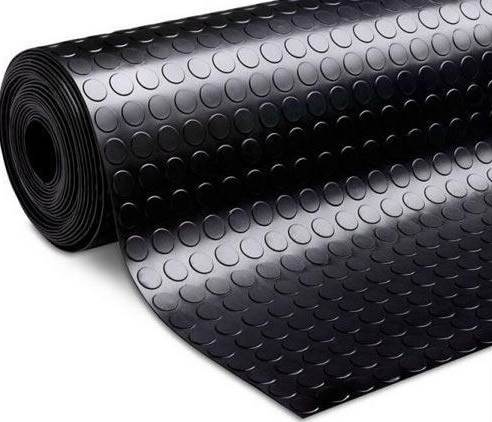
- Studded dot rubber matting – raised circular studs for garages, gyms and workshops. Easy to sweep, resistant to oil, tyre marks and dropped tools.
- Chequer plate rubber matting – industrial tread pattern for plant rooms, hangars, trailers and vehicle floors.
- Plain rubber matting – smooth, easy-clean surface for kennels, workbenches, anti-vibration pads and chemical-resistant floors.
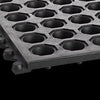
- Drainage and ring rubber matting – open-hole mats that let water, grease and debris fall through. Ideal for commercial kitchens, pool surrounds, bars and outdoor steps.
- Rubber grass mats – honeycomb rubber grass mats that stabilise paddock gateways, overflow car parks and play areas while the grass keeps growing.
Which Thickness of Rubber Matting Do I Need?
| Thickness | Typical use | Traffic |
|---|---|---|
| 3mm | Corridors, shelving, drawer liners, light workshop use | Foot traffic |
| 4mm – 5mm | Van floors, workbenches, entrances, retail and offices | Foot traffic and trolleys |
| 6mm | Garages, workshops, gyms, commercial kitchens | Heavy foot traffic, light vehicles |
| 8mm – 10mm | Factories, warehouses, loading areas, stables | Pallet trucks, equipment, livestock |
| 12mm and above | Horse boxes, forklift routes, drop zones, agricultural buildings | Vehicles and heavy impact |
Not sure how much to order? Use the rubber flooring coverage calculator or read the full rubber matting guide to types, thickness and benefits.
Where Rubber Matting Is Used
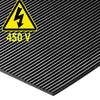
- Industrial and factory floors – anti-fatigue, oil-resistant and electrically insulating matting for production lines and walkways.
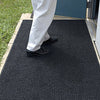
- Commercial entrances – ribbed runners and barrier matting that stop slips at the door.
- Garages and workshops – studded and chequer rolls that shrug off oil, jacks and tyres.
- Gym flooring – dense rubber rolls, tiles and mats for weights areas and home gyms.
- Stables and equestrian – broad ribbed and stable matting for boxes, trailers and wash-down bays.
- Kennels and dog runs – hygienic, non-slip matting that is easy to hose down.
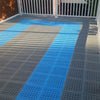
- Outdoor rubber matting – UV-stable, weatherproof rolls for ramps, decking, steps and roof walkways.
- Playgrounds and schools – impact-absorbing safety matting tested to BS EN 1177.
Why Buy Rubber Matting from Slip-Not?
- Extra-wide rolls – widths up to 2m for seamless coverage with fewer joins.
- Cut to length – order by the metre with no minimum roll quantity.
- Slip tested – patterns rated R10 to R11 to DIN 51130. See our guide to slip resistance ratings.
- UK stock, fast dispatch – stock lines leave our Lancashire warehouse the same working day.
- Trade and bulk pricing – volume discounts for contractors, facilities teams and installers.
- Technical support – samples, specifications and fitting advice from people who work with rubber every day.
Rubber Matting FAQs
What is the best rubber matting for outdoor use?
Choose an SBR or EPDM compound with a ribbed, studded or drainage pattern so water runs off rather than pooling. Our outdoor rubber matting guide explains which pattern suits ramps, decking, steps and walkways.
Is rubber matting slip resistant?
Yes. Textured rubber matting is one of the most slip-resistant floor surfaces available, with fine ribbed and studded patterns typically achieving R10 to R11 ratings for wet and oily areas.
Can rubber matting be cut to size?
Yes. Most rolls are sold per linear metre in 1m, 1.2m, 1.5m and 2m widths, and you can trim them on site with a sharp utility knife and straight edge.
How do I fit rubber matting?
Light-traffic areas can be loose laid. For vehicles, ramps and busy walkways use double-sided tape or a rubber flooring adhesive. Full steps are in our rubber flooring installation guide.
How thick should rubber matting be for a garage or workshop?
6mm is the most popular choice for domestic garages and workshops. Move up to 8mm to 10mm for commercial workshops, pallet trucks and heavy equipment.
Can I get a sample first?
Yes. Samples of every rubber matting pattern are available on request so you can check grip, colour and thickness before ordering.
What Our Customers Say
Verified reviews from UK buyers — Free UK delivery
Frequently Asked Questions
What thickness of rubber matting do I need?
For light foot traffic, 3-6mm is sufficient. For heavy foot traffic or standing areas, choose 6-12mm. For industrial use with vehicles or machinery, 12-20mm+ provides optimal durability and protection.
Is rubber matting suitable for outdoor use?
Yes, most rubber matting is UV-resistant and weatherproof, making it ideal for outdoor applications including walkways, playgrounds, and equestrian areas. Look for products specifically rated for outdoor use.
How do I clean rubber matting?
Sweep regularly to remove debris, then mop with warm water and mild detergent. For stubborn stains, use a stiff brush. Avoid harsh chemicals like bleach which can degrade the rubber over time.
Can rubber matting be installed over concrete?
Yes, rubber matting can be laid directly on concrete. For permanent installations, use rubber flooring adhesive. For temporary or removable installations, the weight of the matting usually keeps it in place.
What's the difference between SBR and EPDM rubber?
SBR (Styrene Butadiene Rubber) is cost-effective and suitable for most indoor applications. EPDM (Ethylene Propylene Diene Monomer) offers superior UV and weather resistance, making it better for outdoor and coloured applications.
