












Gym Flooring UK — Rubber Mats, Interlocking Tiles & Rolls for Home & Commercial Gyms
Rubber gym flooring for commercial gyms, home gyms and garage conversions. Heavy duty mats, interlocking tiles and rolls in 8mm–30mm thickness. Impact-absorbing, non-slip, sweat-resistant. Mats, tiles and rolls in stock. Free UK delivery.

In Stock
Reviews

In Stock
Reviews

In Stock
Reviews

In Stock
Reviews

In Stock
Reviews
In Stock
Reviews

In Stock
Reviews

In Stock
Reviews

In Stock
Reviews

In Stock
Reviews

In Stock
ReviewsWhy Rubber Gym Flooring?
Rubber absorbs impact, dampens vibration, reduces noise and provides a firm non-slip surface for any workout. Unlike vinyl or foam, rubber gym flooring withstands dropped weights, resists sweat and cleaning chemicals, and lasts for decades without significant wear.
Types of Gym Flooring
Rubber Gym Mats
Heavy duty mats (15mm to 30mm thick) for free weight zones, Olympic lifting platforms and powerlifting areas. The thick rubber absorbs impact, protecting equipment and the subfloor beneath.
Interlocking Rubber Gym Tiles
1m x 1m jigsaw-edge tiles that cover any floor area without cutting and can be reconfigured as your gym layout changes. Popular for CrossFit boxes and functional training areas.
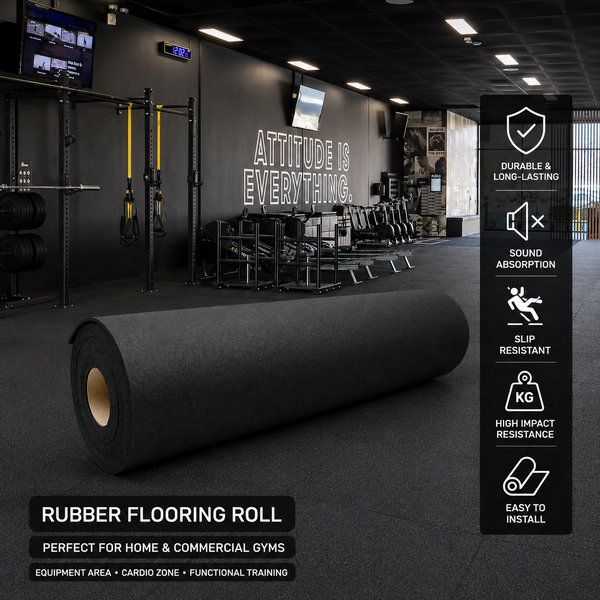
Rubber Gym Flooring Rolls
Seamless coverage for sports halls, fitness studios and large commercial gym floors. Supplied by the linear metre in widths to 1.25m, bonded directly to the subfloor.
Garage Gym Flooring
Same commercial-grade durability at accessible prices for home garage conversions. Quick to install, easy to clean, and available in standard garage dimensions.
Gym Flooring by Zone
Free weight and Olympic lifting zones need 20mm to 30mm thick mats for maximum impact protection. Cardio machine zones use lighter 8mm to 15mm rolls or tiles. Stretching and yoga areas benefit from softer surfaces, while functional training areas work best with interlocking tiles.
Gym Flooring Installation
Smaller areas can be laid without adhesive. For permanent commercial installations, bond rolls with contact adhesive or floor-fixing tape. Interlocking tiles need no adhesive and install in hours. Subfloors must be clean, dry and level.
Frequently Asked Questions
How thick should gym flooring be?
For cardio and general fitness, 8mm to 12mm is adequate. For functional training and light free weights, 15mm to 20mm. For Olympic lifting and heavy free weight areas where weights may be dropped, 25mm to 30mm is recommended.
Can rubber gym flooring be used in a garage?
Yes. Rubber is moisture-resistant, handles temperature extremes without cracking, and lays directly onto concrete without adhesive. Our interlocking tiles install and remove without tools, making them ideal for garage gyms.
How do I clean rubber gym flooring?
Sweep or vacuum regularly, then mop with a diluted gym-safe disinfectant. Rubber resists sweat and most cleaning chemicals. Avoid harsh solvents or bleach which degrade rubber over time.
What Our Customers Say
Verified reviews from UK buyers — Free UK delivery
