







In Stock
Reviews

In Stock
ReviewsKey Benefits at a Glance
- Anti-slip surface — reduces workplace slip-and-fall incidents
- Impact resistant — protects subfloor from dropped tools and loads
- Anti-fatigue — reduces leg and back strain for standing workers
- Chemical resistant — Nitrile grades resist oils, fuels, and greases
- Noise reduction — dampens machinery vibration and impact noise
- Durable — 10-20 year service life in commercial environments
Industrial Rubber Flooring: Quick Selection Guide
| Environment | Recommended Type | Thickness |
|---|---|---|
| General factory / walkways | SBR rubber roll or tile | 6-10mm |
| Heavy machinery / forklifts | Heavy-duty SBR rubber | 10-15mm |
| Oil / chemical environments | Nitrile rubber roll | 6-12mm |
| Food production / kitchens | Food-safe EPDM or Neoprene | 10-15mm |
| Anti-fatigue standing areas | Anti-fatigue rubber mat | 12-20mm |
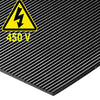
| Electrical switchgear | Electrical safety matting | 3-12mm |
Industrial Rubber Flooring UK — R11–R13 Rated Factory & Warehouse Flooring
Industrial rubber flooring must perform where general-purpose flooring fails. Factory floors, warehouse walkways, processing areas, and engineering workshops present challenges that consumer and commercial rubber flooring simply isn't built for: chemical contamination, heavy vehicle traffic, extreme thermal cycling, oil and hydraulic fluid spills, and sustained heavy foot traffic under load. Slip-Not supplies industrial-grade rubber flooring rated to R11, R12, and R13 under DIN 51130 — independently tested for use in environments governed by the Health and Safety at Work Act 1974 and the Workplace (Health, Safety and Welfare) Regulations 1992.
Industrial Rubber Flooring Specifications
| Slip Rating | Application | Typical Environments |
|---|---|---|
| R10 | Standard commercial | Offices, retail, dry production areas |
| R11 | Wet/contaminated areas | Food production, wet processing, commercial kitchens |
| R12 | High-contamination industrial | Garages, engineering workshops, oil-wet production |
| R13 | Maximum slip resistance | Chemical plants, meat processing, breweries |
Types of Industrial Rubber Flooring
Studded & Bullnose Rubber Flooring
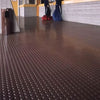
Raised stud patterns provide omnidirectional grip in wet and dry conditions. The space between studs allows contamination to drain away from the walking surface. Stud height and density is graded to provide R11–R12 ratings. Suitable for warehouses, loading bays, and factory walkways where foot traffic and light vehicle traffic share the same surface.
Ribbed Industrial Rubber Flooring
Ribbed rubber provides strong directional grip and excellent drainage along the rib channels. The compressed-air gap between ribs prevents water pooling, maintaining wet-surface slip resistance. Ribbed rubber achieves R11–R12 rating and is widely specified for factory aisles, warehouse pedestrian routes, and covered loading bays.
Nitrile Oil-Resistant Rubber Flooring
Standard SBR rubber swells and degrades on contact with mineral oils, hydraulic fluids, and fuels. Nitrile (NBR) rubber is specifically compounded to resist oil contamination — a mandatory specification for automotive workshops, engineering facilities, and any floor subject to oil or fuel spills. Nitrile rubber flooring maintains its slip resistance and structural integrity in oil-wet environments where SBR products fail within months.
Anti-Fatigue Industrial Matting
Workers standing on hard concrete floors for extended periods experience a measurable increase in fatigue, musculoskeletal discomfort, and error rates. Anti-fatigue industrial matting — combining cushioned rubber underlayer with a slip-resistant surface — reduces the compressive load on joints and musculature. HSE research indicates anti-fatigue matting can reduce lower-limb discomfort by 50–60% in standing work positions. Available in closed-cell foam-rubber composite and solid sponge rubber formats.
HSE Compliance & Specification
Under the Workplace Regulations 1992 (Regulation 12), every floor surface must be suitable for purpose, properly maintained, and free from obstruction. The HSE's Slips Assessment Tool (SAT) evaluates contamination type, footwear, and surface slip resistance together. Specifying R11+ rated rubber flooring in wet or contaminated industrial areas is a documented control measure that can withstand HSE inspection. All Slip-Not industrial rubber flooring products carry independent slip resistance test certificates available on request.
Frequently Asked Questions — Industrial Rubber Flooring
What slip rating is required for industrial flooring under HSE guidelines?
The HSE does not mandate specific R-ratings but recommends using the Slips Assessment Tool (SAT) to determine appropriate slip resistance for the specific contamination, footwear, and activity present. In practice, most industrial environments with wet or oil contamination require R11–R12 rated flooring. For environments with grease, food fat, or chemical contamination, R12–R13 is the appropriate specification.
Can industrial rubber flooring be installed over existing concrete?
Yes. Industrial rubber flooring rolls and tiles can be loose-laid over existing concrete. For permanent installation, contact adhesive rated for rubber flooring is applied to both surfaces and allowed to tack before pressing. The concrete must be clean, dry, level, and free from surface contamination. For damaged or uneven concrete, a levelling compound should be applied first — an uneven substrate creates high spots that concentrate wear and compromise slip resistance.
What is the best industrial rubber flooring for oil-wet environments?
Nitrile (NBR) rubber is the mandatory specification for oil-wet industrial environments. Standard SBR rubber — which makes up the majority of low-cost industrial matting — swells, softens, and loses slip resistance when contaminated with mineral oil. Nitrile rubber is specifically compounded for oil resistance and maintains its structural and slip-resistance properties in sustained oil contact. Always verify the rubber compound specification when purchasing — not all black rubber matting is oil-resistant.
How thick should industrial rubber flooring be?
For heavy foot traffic on concrete, 6mm is the minimum practical thickness. For walkways subject to pallet truck or ride-on sweeper traffic, 8–10mm is recommended. For heavy forklift routes, reinforced rubber flooring of 12mm+ or rubber-topped aluminium plates are more appropriate than standard rubber rolls. Anti-fatigue applications require a minimum 12mm cushioned rubber or foam-rubber composite for meaningful ergonomic benefit.
Does rubber flooring meet food industry hygiene requirements?
Standard SBR rubber flooring is not food-approved. For food production environments governed by EC Regulation 852/2004 (Food Hygiene), specify EPDM or specifically food-grade rubber flooring. Food-grade rubber must be non-toxic, resistant to cleaning chemicals, and impermeable to prevent bacterial harbourage. Our food industry matting collection includes products with appropriate food contact documentation.
📖 Further Reading — Industrial Rubber Flooring UK
- Industrial Rubber Flooring Guide: Heavy-Duty Solutions for Factories &
- Industrial Rubber Tiles Guide: Heavy-Duty Flooring for Factories & Wor
- Rubber Matting Guide: Industrial & Commercial Anti‑Slip Solutions
- Industrial Rubber Flooring UK: Specifications, Compliance & Applicatio
- How to Choose the Right Rubber Matting for Gyms, Workshops & Industria
Industrial Rubber Flooring — Deep Specification Guide
Industrial rubber flooring specification is a health and safety matter, not an aesthetic one. The Workplace (Health, Safety and Welfare) Regulations 1992 place a legal duty on employers to ensure floors are suitable and free from hazards. Getting the compound wrong doesn't just result in early replacement — in safety-critical applications it creates genuine liability.
The Oil Resistance Rule — Non-Negotiable
Standard SBR rubber — the most common low-cost industrial matting — swells, softens and loses slip resistance on contact with mineral oil. In an automotive workshop, engineering facility, or any area where hydraulic fluid, diesel, or mineral oil is present, SBR matting will fail within months. Nitrile rubber (NBR) is the mandatory specification for all oil-contact zones. The additional cost (typically 50-80% more per m²) is recovered within the first replacement cycle that SBR forces.
Zone-by-Zone Specification Framework
Zone 1 — Dry production: 6mm ribbed SBR R10. Anti-fatigue 15-20mm at standing workstations.
Zone 2 — Wet processing/food: R11-R12 drainage link matting. Workers above liquid plane. Liftable for floor inspection. EC 852/2004 HACCP documentation available.
Zone 3 — Oil-contaminated engineering: Nitrile compound R12. 6-10mm minimum.
Zone 4 — Electrical areas: BS EN 61111 classified insulating matting — NOT standard rubber. Standard rubber contains conductive carbon black.
Case Study: Food Production EHO Compliance
A UK food manufacturer received a "Major" EHO non-compliance for floor drainage and slip risk in a packaging area. Slip-Not specified and supplied R11 nitrile drainage mats across 1,800m² on a 2-week timeline, with HACCP compound data sheets for the food safety management system review. The replacement matting cleared the subsequent EHO re-inspection with no further flooring non-compliances.
Procurement Documentation
Slip-Not provides complete procurement documentation packs: compound analysis, independent R-rating certificates, chemical compatibility tables, and sector-specific compliance documents. Free to download for any product. Contact our industrial specification team for custom documentation packs for complex environments.
Regulatory Compliance Reference — UK Rubber Flooring Standards
| Standard | Measures | Applies To |
|---|---|---|
| Workplace Regs 1992 Reg 12 | Floor suitability, maintenance, slip/trip prevention | All employers, all commercial floors |
| BS 7976-2 (PTV) | Pendulum Test Value — wet slip resistance | All pedestrian floor surfaces |
| DIN 51130 (R-rating) | Industrial ramp test — contamination-specific | Industrial, food, commercial kitchen |
| BS EN 1177:2018 | Playground impact attenuation by critical fall height | All playground safety surfacing |
| BS 8300 (Accessibility) | Inclusive building design — floor surface requirements | Public buildings, accessible routes |
| BS EN 61111 | Electrical insulating matting voltage class ratings | Switchrooms, substations, MCC panels |
| EC Regulation 852/2004 | Food hygiene — floor surfaces in food production | All food businesses, EHO inspection |
| HSE SAT (Slips Assessment Tool) | Comprehensive slip risk assessment framework | Employers assessing floor safety risks |
Rubber Matting vs Alternative Floor Solutions
| Property | Rubber | PVC Vinyl | Carpet | Epoxy Resin |
|---|---|---|---|---|
| Wet slip resistance | Excellent | Good | Poor | Good |
| Anti-fatigue benefit | Excellent | None | Moderate | None |
| Removable/reusable | Yes | No (bonded) | Some | No |
| Oil resistance (NBR) | Excellent | Good | Poor | Excellent |
| Temperature range | -40°C to 130°C | 0-60°C | 5-40°C | -20-80°C |
| Service life (commercial) | 10-15 years | 7-12 years | 3-8 years | 8-15 years |
Ordering from Slip-Not
All products cut to your exact dimensions. No minimum order. Same or next working day dispatch on stock items. Free UK mainland delivery. Technical specification advice from our team — no obligation. Independent test certificates and compound data sheets available on request. If our product isn't the right specification for your application, we'll tell you.
Installation Guide — Getting the Best from Rubber Flooring
Subfloor Preparation
The subfloor quality determines rubber flooring performance regardless of product quality. Every installation should start with these checks:
- Level test: Floor must be flat within ±3mm over 3m. Use a 3m straightedge and feeler gauge. Low spots: fill with levelling compound and allow to cure. High spots: grind or feather with self-levelling compound.
- Moisture test: Concrete must be below 75% relative humidity for bonded installation. Test with a surface hygrometer or calcium chloride test. New concrete requires minimum 28 days cure and testing before installation.
- Surface contamination: Remove all oil, grease, old adhesive, paint, and curing compound. Contamination prevents adhesive bonding. Mechanical scarification (diamond grinding or shot blasting) followed by vacuuming is the professional standard.
- Temperature: Subfloor and rubber should be 15-25°C during installation. Cold rubber is stiff, doesn't lay flat, and adhesives cure poorly in cold conditions.
Adhesive Selection
| Application | Adhesive Type | Notes |
|---|---|---|
| Standard rubber rolls on concrete | SBR-based contact adhesive | Apply to both surfaces, tack off 10-20 min |
| Nitrile in chemical/wet areas | Solvent-free epoxy | Higher bond strength in contamination |
| EPDM outdoor permanent | Weather-resistant contact adhesive | Rated for temperature range at your location |
| Rubber on wood subfloor | Water-based pressure-sensitive adhesive | Avoid solvent adhesives — can swell timber |
Cutting Techniques
- Up to 6mm: Sharp Stanley knife, fresh blade, steel straight edge. Score firmly, fold against cut to snap cleanly.
- 6-15mm: Jigsaw with rubber-cutting blade, or heavy-duty scissors for straight cuts.
- 15mm+: Bandsaw or circular saw with abrasive disc. For curved cuts: jigsaw.
- Complex gasket shapes: Cardboard template first, transfer to rubber, jigsaw or waterjet.
Always acclimatise rubber to room temperature for 24 hours before cutting — cold rubber tears rather than cuts cleanly.
Rubber Flooring Cost Guide UK 2026
| Product Type | Price Range/m² | Service Life |
|---|---|---|
| Standard SBR ribbed roll (3-6mm) | £8-18/m² | 8-12 years commercial |
| Heavy duty SBR (8-12mm) | £18-35/m² | 10-15 years |
| Nitrile oil-resistant (6-10mm) | £25-55/m² | 8-12 years oil environments |
| Anti-fatigue (12-25mm) | £20-60/m² | 3-7 years depending on grade |
| Interlocking gym tiles (15-20mm) | £18-45/m² | 6-12 years commercial |
| Stable mats (17-22mm solid) | £35-70/m² | 10-15 years |
| EPDM outdoor (6-12mm) | £20-50/m² | 15+ years outdoor |
Industrial Rubber Flooring — Sector-Specific Specification Guide
Automotive Manufacturing & Vehicle Workshops
The automotive sector is the highest-volume user of nitrile rubber flooring in the UK. From OEM manufacturing lines to high street MOT bays, petroleum oil contact makes nitrile (NBR) the mandatory compound for any floor surface in vehicle service, manufacturing, and storage areas. At an automotive manufacturing plant, the specification typically varies by zone: body shop (metallic dust, minimal oil) — SBR R10; paint shop (solvents, chemical overspray) — EPDM; engine assembly (sustained oil contact) — nitrile R12; finished vehicle storage — SBR.
Pharmaceutical Manufacturing
EU GMP Annex 1 (sterile manufacturing) and EU GMP Annex 15 (qualification and validation) impose strict requirements on all materials in pharmaceutical manufacturing environments. For ISO Class C and D cleanrooms (non-sterile manufacturing), anti-fatigue matting with controlled particulate generation is acceptable. Standard SBR rubber generates measurable particulates under foot traffic abrasion — not appropriate for Grade A/B sterile zones but acceptable in Grade C/D with appropriate particulate generation data. For Grade A/B sterile environments, anti-fatigue matting is generally excluded — hardfloor epoxy with anti-fatigue footwear is standard.
Food & Beverage Processing
UK food manufacturing is governed by: EC Regulation 852/2004 (food hygiene), FSA Codes of Practice, and BRC Global Standard for Food Safety (typically required by major retailers). Floor matting must be documented in the HACCP food safety management system. The matting specification must address: slip resistance (R11 minimum in wet zones), compound chemical resistance to cleaning agents and food contamination, drainage design (drainage mats liftable for floor inspection), and food contact compliance where applicable. Slip-Not provides full compound data sheets and compliance documentation suitable for HACCP records, BRC audits, and EHO inspections.
Brewing, Distilling & Food Beverage
Brewery and distillery environments create unique floor contamination — fermented grain, hops, yeast, and cleaning acids used in CIP (Clean-In-Place) systems. EPDM rubber is the correct compound for most brewery floor applications: acid resistance (citric acid, phosphoric acid used in brewery cleaning), water and steam resistance, and good general durability under trolley and pallet traffic. Beer and spirit spillage creates significant slip risk — R12 drainage matting around fermenters, filling lines, and dispatch areas is the professional specification.
Warehousing & Logistics
Large logistics and distribution facilities require zone-specific matting rather than uniform coverage. The professional approach:
- Packing stations: 15-20mm anti-fatigue closed-cell rubber at each operator position — documented welfare benefit and productivity improvement
- Pedestrian walkways (non-vehicle): 6-8mm ribbed or studded SBR anti-slip roll
- Loading bay approaches: Heavy-duty R12 drainage mat rated for pallet truck traffic
- Welfare areas (breakrooms, changing rooms): Standard anti-fatigue or comfort matting
For facilities under HSG76 (Warehousing and Storage Guidance), pedestrian routes must be clearly delineated. High-visibility yellow rubber walkway matting satisfies both the anti-slip requirement and the visual segregation requirement in a single product.
Chemical Processing & Hazardous Areas
Chemical processing environments require bespoke compound selection. The broad compound families (SBR, EPDM, nitrile, neoprene) cover most common industrial chemicals, but complex blends require specific compatibility checking. Slip-Not's technical team provides chemical compatibility assessment for unusual environments — contact us with the specific chemical name and concentration before specifying matting in aggressive chemical environments.
Construction Sites & Temporary Works
Construction site matting requirements: robust enough for heavy work boot traffic and tool contamination, light enough to move as the site configuration changes. Slip-Not's construction site matting range includes loose-lay rolls with reinforced edges that resist lifting under foot traffic, and rubber grass mats for protecting site surface vegetation during construction access routes.
Procurement Documentation for Industrial Contracts
For tendering and framework contracts, Slip-Not provides: compound analysis data sheets, independent DIN 51130 R-rating test certificates, BS 7976-2 PTV certificates, chemical compatibility tables, sector-specific compliance documents (EC 852/2004, BS EN 61111, BS 8300). Contact our industrial specification team with your tender requirements for a complete documentation pack.
Slip-Not — UK Rubber Matting Specialists
Slip-Not is a UK rubber matting specialist — providing SBR, EPDM, nitrile, neoprene, and specialist rubber flooring to industry, commerce, equestrian, and domestic customers. We supply independent test certificates, compound data sheets, and compliance documentation with every commercial order.
Why Specification Matters
The wrong rubber compound in a slip-critical environment doesn't just fail early — it creates a false sense of security that could leave an employer with inadequate protection against a Regulation 12 claim. At Slip-Not, our approach to specification is straightforward: we match the product to the application requirements, provide the compliance documentation to support your health and safety management, and will tell you if a competitor's product is more appropriate for your specific requirement.
Key Compound Selection Rules
- Petroleum oil contact: Nitrile (NBR) only — SBR fails within months
- Permanent outdoor UV: EPDM only — SBR cracks in 12-18 months outdoors
- Food production contact: Food-grade EPDM or nitrile with EC 1935/2004 documentation
- Electrical switchrooms: BS EN 61111 classified insulating matting only — standard rubber contains conductive carbon black
- General indoor commercial: SBR is appropriate and most economical
Ordering from Slip-Not
All products cut to your exact dimensions. Standard widths 1m, 1.22m, 1.4m, 2m in all profiles. No minimum order. Same or next working day dispatch. Free UK mainland delivery. Call our technical team for specification advice — we provide genuine guidance, not just sales.
Industrial Rubber Flooring — Ordering & Size Reference
Common Industrial Matting Formats
| Format | Typical Size | Best For |
|---|---|---|
| Ribbed roll | 1.22m or 2m wide, cut to length | Corridors, walkways, aisle coverage |
| Drainage link mat | 900mm x 900mm interlocking | Wet processing, kitchen, wash areas |
| Anti-fatigue workstation mat | 600mm x 900mm to 900mm x 1,500mm | Individual standing positions |
| Nitrile roll | 1.22m or 1.4m wide, cut to length | Oil-wet workshops, garages |
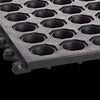
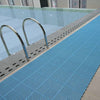
| Open-grid drainage mat | 1m x 10m roll or 900mm x 900mm tiles | Heavy wet contamination, pool surrounds |
All products cut to your specified dimensions — no minimum order, no waste. Independent R-rating test certificates and compound data sheets available with every order. Same or next working day dispatch on stock items. Free UK mainland delivery. Call our industrial specification team for complex or unusual application advice.
Compound Quick Selection
Oil/fuel/hydraulic: NITRILE. Outdoor UV: EPDM. General dry industrial: SBR. Steam/high temp: EPDM. Food production: food-grade EPDM or nitrile with EC 852/2004 documentation. Electrical areas: BS EN 61111 classified matting only.
Industrial Rubber Flooring — Advanced Specification Reference
Chemical Resistance Data — Quick Reference
| Chemical | SBR | EPDM | Nitrile | Neoprene |
|---|---|---|---|---|
| Mineral oil / hydraulic fluid | Poor | Poor | Excellent | Good |
| Diesel / petrol / fuel | Poor | Poor | Good | Good |
| Water / steam | Good | Excellent | Good | Good |
| Dilute acids (citric, phosphoric) | Moderate | Good | Moderate | Moderate |
| Dilute alkalis (NaOH, cleaning) | Moderate | Good | Good | Moderate |
| UV / outdoor weathering | Poor | Excellent | Poor | Good |
| Seawater / marine exposure | Moderate | Good | Moderate | Good |
Load Rating Reference
Standard industrial rubber matting is rated for pedestrian traffic and light equipment loads. For planning vehicle routes and loading zones:
- Pedestrian only (3-8mm SBR): Maximum static load 2 kg/cm² — adequate for all foot traffic
- Pallet truck crossings (10-15mm SBR): Maximum static load 5-10 kg/cm² — verify against specific mat load rating
- Vehicle traffic (requires specialist rating): Standard rubber matting not rated for vehicles — use rubber-topped steel plate or high-density 15mm+ specifically load-tested
Industrial Rubber Flooring — Summary Reference
The Critical Specification Rules
- Oil contact → Nitrile (NBR) mandatory. SBR fails within months in oil. No exceptions, no compromise. The additional cost is recovered in the first SBR replacement cycle.
- Outdoor/UV → EPDM mandatory. SBR cracks in outdoor UV within 12-18 months. EPDM lasts 15+ years outdoors.
- Electrical switchrooms → BS EN 61111 rated matting only. Standard rubber contains conductive carbon black. Only BS EN 61111 matting with non-conductive fillers provides electrical insulation protection.
- Food production → Food-grade compound + HACCP documentation. Standard industrial rubber is not food-approved. Request EC 852/2004 compliance documentation for food contact applications.
- Forklift zones → Specialist products only. Standard rubber matting is not rated for forklift loads. Vehicle traffic requires rubber-topped steel plate or specifically load-tested high-density rubber.
Ordering from Slip-Not
All industrial rubber flooring available cut to your specified dimensions from stock. Same or next working day dispatch. Free UK mainland delivery. Independent R-rating test certificates and compound data sheets included with commercial orders. Call our industrial specification team for any complex or unusual specification requirement.
Industrial Rubber Flooring — Why Slip-Not
Slip-Not supplies industrial rubber flooring to NHS Trusts, major food manufacturers, automotive groups, pharmaceutical companies, and thousands of smaller industrial businesses across the UK. We understand the compliance requirements — R-rating test certificates for HSE inspections, HACCP documentation for food safety management, compound data sheets for procurement records — and we provide them as standard with every commercial order.
If you're specifying for a complex or unusual industrial environment, call our technical team before ordering. We've specified nitrile rubber for every conceivable oil-contamination scenario, EPDM for outdoor and chemical environments, and specialist compounds for pharmaceutical, nuclear, and marine applications. No obligation, no hard sell — we provide the most accurate specification for your environment.
All products cut to your exact dimensions from UK warehouse stock. Same or next working day dispatch. Free UK mainland delivery. Independent test certificates and compound data sheets with every order.
Industrial Rubber Flooring — Comprehensive Application Guide
Zone-by-Zone Specification for UK Factories & Warehouses
Zone 1 — Dry production areas: 6mm ribbed SBR R10. Anti-fatigue 15-20mm at standing workstations. SBR appropriate where contamination is dry debris only and no oil or chemical contact occurs.
Zone 2 — Wet processing / food production: R11-R12 drainage link matting in EPDM or nitrile compound. Workers above liquid plane. Mats must be liftable for floor inspection (EC 852/2004 compliance). Nitrile for grease/fat contamination; EPDM for water, acid, and alkali cleaning agents.
Zone 3 — Oil-contaminated areas (workshops, garages, machining): Nitrile (NBR) rubber mandatory. R12 minimum. SBR fails within months in oil contact. 6-10mm nitrile roll or drainage mat. Recover the additional cost within the first SBR replacement cycle.
Zone 4 — Pedestrian walkways: 6-8mm ribbed or studded SBR R11. High-visibility yellow for pedestrian route marking under HSG76 warehouse safety guidance.
Zone 5 — Electrical switchrooms and MCC panels: BS EN 61111 classified electrical insulating matting — not standard rubber. Standard rubber contains conductive carbon black. Class II (white, 11kV) is the UK standard for 11kV secondary substations. Class 0 (beige) for LV switchboards. Never specify standard rubber in electrical rooms regardless of appearance.
Zone 6 — Forklift and vehicle crossing areas: Standard rubber matting is NOT rated for forklift traffic. For pedestrian/vehicle mixed areas: rubber-topped steel plates or high-density rubber 15mm+ specifically load-tested for vehicle traffic. Mark pedestrian-only zones in yellow to separate traffic streams (HSG76).
Industrial Floor Matting Procurement Standards
For procurement officers and facilities managers specifying industrial matting on tender documents, the following specification elements ensure comparable quotes from multiple suppliers and adequate protection under Regulation 12:
- Compound type: State specifically (SBR/EPDM/NBR/neoprene) — do not accept "rubber" without compound specification
- Slip resistance: State minimum DIN 51130 R-rating AND minimum BS 7976-2 PTV (wet), and specify that independent test certificates must be provided
- Thickness: State in mm with tolerance (e.g., 6mm ±0.5mm)
- Format: Roll (width × length), interlocking tile (500×500mm), or sheet
- Load rating: Maximum static load and vehicle type if applicable
- Compliance documentation: State all required certificates: R-rating test, compound analysis, food contact compliance (if applicable), BS EN 61111 class (if electrical)
Slip-Not provides all the above documentation with commercial orders. Our technical specification team assists procurement officers in developing specification language for tender documents at no charge. Call 01282 277786 for industrial specification support.
Case Study: Food Production EC 852/2004 Compliance
A UK food manufacturer received a "Major" EHO non-compliance related to floor drainage and slip risk in a packaging area. The existing SBR rubber matting had degraded from cleaning chemical contact and was no longer providing adequate drainage or slip resistance. Slip-Not specified and supplied R11 nitrile drainage mats with EC 852/2004 HACCP documentation on a 2-week delivery timescale. The replacement matting cleared the subsequent EHO re-inspection. The key lesson: SBR matting in cleaning-chemical-heavy food production environments is a recurring compliance risk. Nitrile compound, specified once correctly, resolves the problem for 8-12 years.
Industrial Matting — Total Cost of Ownership
| Specification | Cost/m² | Service Life | 10yr Cost |
|---|---|---|---|
| SBR in oil-wet zone (wrong spec) | £10-15 | 6-18 months | £70-200 |
| Nitrile in oil-wet zone (correct) | £25-45 | 8-12 years | £25-55 |
| SBR in dry walkway | £8-18 | 10-15 years | £8-18 |
| Anti-fatigue at workstation | £20-55 | 3-7 years | £30-90 (payback from productivity) |
Industrial Rubber Flooring — UK Sector Applications
Automotive Manufacturing (OEM & Tier 1)
Large automotive manufacturing plants operate multiple production zones each with distinct flooring requirements. Body shop (dry metalworking): SBR R10 in aisles, anti-fatigue 15-20mm at assembly stations. Paint shop (solvent overspray, chemical cleaning): EPDM or specialist solvent-resistant compound. Engine assembly (sustained oil contact): nitrile NBR R12 mandatory throughout. Quality control (dry inspection, precision measurement): SBR smooth or low-profile ribbed for clean, level walking surface. Vehicle storage (outdoor/covered): EPDM drainage for external areas.
Plastics & Polymers Manufacturing
Plastics processing environments have specific flooring challenges. Polymer pellets and granules are highly slippery underfoot — standard smooth concrete is extremely dangerous. Rubber matting with aggressive studded profile (R11+) in pellet-contaminated areas significantly reduces slip risk. Anti-static matting in areas near electrical equipment — not standard rubber, which can build static. Anti-fatigue at operator positions where cycle times are short (10-15 seconds) but shifts are 12 hours.
Printing Industry
Commercial and industrial printing environments combine ink contamination (oil-based and water-based inks), solvent use for press cleaning, and sustained standing at press operator positions. Nitrile rubber matting handles oil-based ink contamination; EPDM handles water-based. Anti-fatigue matting at press operator positions — 12-hour shifts at a single printing position without adequate anti-fatigue matting creates measurable productivity losses from fatigue in the second half of the shift.
Metalworking & Engineering
CNC machining, fabrication, and metal forming environments create the most hazardous combination of floor contamination: metal swarf (highly abrasive), cutting fluid (oil-water emulsion), and machine vibration. Swarf-trapping mats with deep drainage pockets capture and contain metal chips that would otherwise create a slip hazard and spread around the facility. Nitrile compound for cutting fluid resistance. 8-10mm for pedestrian areas; swarf-specific mat formats for beneath machine tools.
Chemical Processing & Hazardous Materials
Chemical processing environments require bespoke compound specification based on the actual chemicals present. The broad compound categories (SBR, EPDM, nitrile, neoprene) cover most common industrial chemicals, but complex blends or unusual chemicals require specific compatibility verification. Slip-Not's technical team provides chemical compatibility assessment for unusual environments — provide the specific chemical name and concentration before specifying any matting in aggressive chemical environments. For environments with multiple chemicals, the compound must be compatible with all chemicals present.
Pharmaceutical GMP Manufacturing
EU GMP (Good Manufacturing Practice) requirements govern all materials in pharmaceutical manufacturing environments. For non-sterile manufacturing areas, anti-fatigue matting with documented particulate generation data is acceptable. Standard SBR rubber generates measurable particulates under foot traffic abrasion — document and risk-assess for your specific GMP classification area. For Grade C/D sterile areas, closed-cell EPDM or specifically approved cleanroom-grade matting. Grade A/B sterile environments: rubber matting is generally incompatible — hardfloor with anti-fatigue footwear is standard.
Food & Beverage Production — Detailed Specification
The food production environment demands the most rigorous rubber matting specification of any industrial sector. Every element of the specification has a regulatory basis:
- Slip resistance R11: HSE CAIS83 guidance and EC Regulation 852/2004 requirement for food production wet zones
- Compound chemical resistance: Nitrile for cooking fats and oils; EPDM for water and acid cleaning. SBR fails in grease contact
- Drainage design: Liftable open-drain mats required for floor inspection under EHO audit (Regulation 852/2004)
- Food contact compliance: If food contact possible — EC 1935/2004 or FDA 21 CFR 177.2600 documentation required
- HACCP documentation: Compound data sheets for food safety management system records
Slip-Not provides the complete compliance documentation pack for food production customers: compound analysis, R-rating test certificates, food contact compliance where applicable, and HACCP-ready data sheets. This documentation pack is provided as standard with commercial food production orders — no additional charge.
Industrial Rubber Flooring — Maintenance, Lifecycle & Procurement Reference
Industrial Matting Lifecycle Planning
Planned replacement rather than reactive replacement after failure is the professional approach to industrial matting management. A mat that has lost its anti-slip or anti-fatigue properties but has not physically failed represents a continuing risk. Planned replacement cycles by environment:
| Mat Type & Environment | Replacement Cycle | Replacement Trigger |
|---|---|---|
| SBR walkway roll — dry industrial | 8-12 years | Profile worn flat |
| Nitrile — oil-wet workshop | 8-12 years | Oil saturation, profile worn |
| Anti-fatigue — light commercial | 5-7 years | Compression set >25% |
| Anti-fatigue — heavy industrial | 2-4 years | Compression set or surface wear |
| Drainage link mat — kitchen/food | 2-3 years | Cell structure flat, surface degraded |
| Electrical safety mat (BS EN 61111) | 10 years maximum | Test failure, visible damage |
Industrial Matting Maintenance — Professional Standards
Anti-fatigue mats: Monthly compression test (press firmly, time recovery — under 2 seconds good, over 3 seconds replace). Weekly cleaning with appropriate compound-compatible cleaner. Annual inspection against original specification.
Drainage link mats (kitchens/food production): Lift and clean beneath daily (EHO requirement under EC 852/2004). Scrub mat surface with degreasing cleaner and hot water. Weekly disinfection. Replace when drainage cell structure permanently compressed or surface texture degraded.
Walkway rubber rolls: Sweep or vacuum daily. Mop weekly. Inspect edges quarterly for lifting. Replace when profile worn flat — a flat-profile ribbed or studded mat provides significantly reduced slip resistance compared to a new mat with the same profile design.
Nitrile oil-resistant mats: Remove spillages promptly. Wipe with water-based degreaser (not solvent-based). Replace when mat shows oil saturation (blistering or permanent softening), or when surface has lost its anti-slip profile texture.
HSE Compliance — Industrial Rubber Flooring
The HSE's primary tool for evaluating industrial floor slip risk is the Slips Assessment Tool (SAT) — a free online risk assessment at hse.gov.uk that evaluates contamination type, footwear, cleaning frequency, and surface type to produce a risk rating and recommended PTV/R-rating. HSE inspectors use the SAT approach when investigating industrial slip accidents.
Key compliance points for industrial facilities:
- Regulation 12 (Workplace Regs 1992): Floor must be suitable, maintained, and free from hazardous conditions. Non-compliance can result in HSE enforcement notice and unlimited fines under HSWA 1974.
- Documentation: Product data sheets showing R-rating and compound specification constitute evidence of appropriate specification. Always retain these documents.
- Regular inspection: Worn or damaged matting that no longer achieves its rated R-rating is a Regulation 12 non-compliance. Planned replacement based on inspection is the correct approach.
- Emergency replacement: If matting is found to be substantially worn or damaged, it should be replaced or the area temporarily closed to foot traffic until replacement is arranged. Allowing continued use of matting that has lost its slip resistance is a continuing Regulation 12 breach.
Slip-Not provides the documentation needed for Regulation 12 compliance: independent R-rating test certificates, compound specification data sheets, and technical guidance on appropriate specification for industrial environments. Call 01282 277786 for industrial compliance specification support.
Industrial Rubber Flooring — Final Summary
Slip-Not industrial rubber flooring specification support: compound selection for any industrial environment, independent R-rating test certificates, compound data sheets for procurement and compliance records, and complete documentation packs for food production, pharmaceutical, and healthcare environments.
Our industrial specification team has specified rubber flooring for every sector in UK industry — from NHS hospitals to automotive OEM plants, from food production to offshore facilities. We understand the regulatory requirements, the operational constraints, and the total cost of ownership implications of every specification decision. We provide genuine technical advice, not product sales — if a competitor's product is more appropriate for your specific requirement, we'll tell you.
Slip-Not industrial rubber flooring: available cut to any dimension from UK warehouse stock. Same or next working day dispatch. Free UK mainland delivery. No minimum order. Independent test certificates and compliance documentation included with commercial orders. Call 01282 277786 for industrial specification support.
What Our Customers Say
Verified reviews from UK buyers — Free UK delivery
