

Gym Flooring
Professional gym flooring mats, rolls and interlocking tiles. For commercial and home gyms.









Gym Flooring UK — Rubber Mats, Interlocking Tiles & Rolls for Home & Commercial Gyms
Rubber gym flooring for commercial gyms, home gyms and garage conversions. Heavy-duty mats, interlocking tiles and rolls from 8mm to 40mm thick. Impact-absorbing, non-slip and sweat-resistant, held in UK stock for fast dispatch.

In Stock
Reviews

In Stock
Reviews

In Stock
Reviews

In Stock
Reviews

In Stock
Reviews
In Stock
Reviews

In Stock
Reviews

In Stock
Reviews

In Stock
Reviews

In Stock
Reviews

In Stock
ReviewsShop Gym Flooring by Type
- Rubber gym flooring – dense 15mm to 40mm rubber tiles and mats built to take dropped barbells, dumbbells and kettlebells without marking the subfloor.
- Interlocking gym floor tiles – 1m x 1m jigsaw-edge tiles that cover any area without adhesive and can be lifted and re-laid when your layout changes.
- Gym flooring rolls – 4mm to 12mm rubber rolls, cut to length, for cardio areas, studios and large commercial floors with the fewest joins.
- Home gym flooring – mats and tiles sized for spare rooms, garden rooms and conservatories.
- Garage gym flooring – thicker tiles and rolls that insulate against cold concrete and cope with cars sharing the space.
What Is the Best Flooring for a Gym?
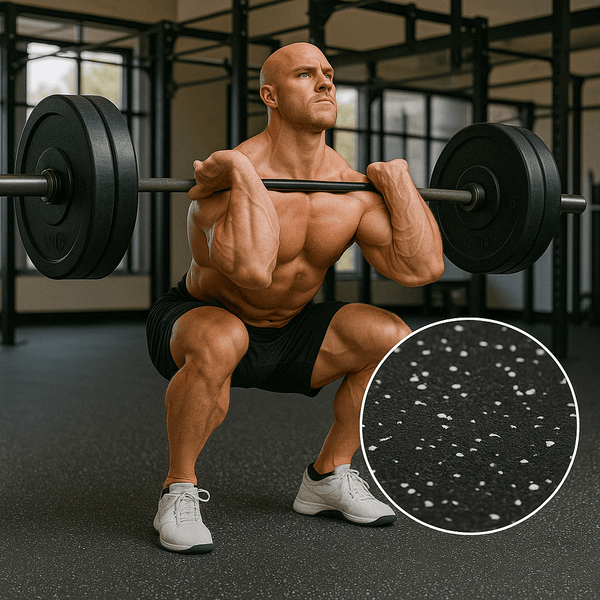
Rubber is the best flooring for almost every gym. It absorbs impact, dampens vibration, cuts noise transfer to neighbouring rooms and gives a firm, non-slip footing for lifting, HIIT and stretching. Foam tiles are cheaper but compress under racks and tear under heavy use; vinyl and laminate crack when weights are dropped. For a commercial facility, specify 20mm or thicker recycled rubber in free-weights areas, 15mm interlocking tiles across functional zones and 6mm to 8mm rolls under cardio machines. Our rubber vs foam gym flooring guide compares the options in detail.
Gym Flooring Thickness Guide
| Thickness | Best for | Format |
|---|---|---|
| 4mm – 8mm | Cardio areas, stretching zones, studios, treadmills and bikes | Rubber rolls |
| 10mm – 15mm | Home gyms, functional training, dumbbells up to 30kg | Interlocking tiles or rolls |
| 20mm | Commercial gyms, racks, barbell work, kettlebells | Tiles and mats |
| 30mm – 40mm | Olympic lifting platforms, deadlift zones, CrossFit drop areas | Heavy-duty tiles and platform mats |
Is 20mm gym flooring enough? For most commercial gyms, yes. 20mm rubber handles loaded barbells and standard drops; move to 30mm or 40mm only where athletes drop from overhead or where you need to protect a suspended timber floor. Use the gym flooring cost calculator to compare thicknesses for your floor area.
Gym Flooring by Zone
- Free-weights and racks – 20mm to 40mm rubber tiles or lifting platforms with a non-slip textured top.
- Functional and HIIT – 15mm interlocking tiles that grip trainers and absorb box jumps and burpees.
- Cardio and machines – 6mm to 8mm rubber rolls that protect the floor from machine feet and sweat.
- Studios, yoga and Pilates – smooth 4mm to 6mm rolls that are easy to clean and comfortable barefoot.
- Garages and outbuildings – thicker tiles that insulate against cold concrete and resist tyre marks.
Why Buy Gym Flooring from Slip-Not?
- Fitted in more than 5,000 UK gyms – from independent boxes to national fitness chains, schools and sports centres.
- UK stock and fast dispatch – tiles, mats and rolls ship from our Lancashire warehouse the same working day.
- Cut-to-length rolls – order by the metre and only pay for the floor you need.
- Commercial-grade rubber – high-density SBR and EPDM compounds that resist sweat, cleaning chemicals and years of impact.
- Trade and project pricing – volume quotes for gym fit-out companies, facilities managers and PT studio owners.
- Expert support – zone plans, samples and installation advice from a team that has floored gyms for over 16 years.
Gym Flooring FAQs
Can you put gym flooring over concrete?
Yes. A dry, swept concrete floor is the ideal base. Interlocking tiles and heavy mats can be loose laid; rolls can be loose laid, taped or bonded with rubber flooring adhesive for a permanent finish. In a garage, lay a damp-proof membrane first if the slab gets wet.
What thickness of gym flooring do I need for a home gym?
10mm to 15mm suits most home gyms with dumbbells, benches and a rack. Go to 20mm if you deadlift or drop loaded barbells. Our home gym flooring guide walks through the choice room by room.
Does rubber gym flooring smell?
Recycled rubber has a mild odour when new that fades within a few weeks with ventilation. Our premium EPDM-topped tiles have very little smell from day one.
How much does gym flooring cost in the UK?
Budget around £20 to £30 per square metre for 15mm interlocking tiles, £30 to £45 per square metre for 20mm commercial tiles and more for 30mm to 40mm lifting platforms. See cheap gym flooring options for the most cost-effective ways to cover a large area.
How do you clean gym flooring?
Sweep or vacuum daily, then mop with warm water and a pH-neutral cleaner. Avoid bleach and solvent-based products that dry rubber out. Full advice is in our how to clean gym flooring guide.
Is rubber gym flooring suitable for commercial use?
Yes. Our 20mm to 40mm tiles and platform mats are specified for commercial gyms, leisure centres, schools and CrossFit affiliates. Read the commercial gym flooring guide for specification, fire ratings and installation.
What Our Customers Say
Verified reviews from UK buyers — Free UK delivery
